
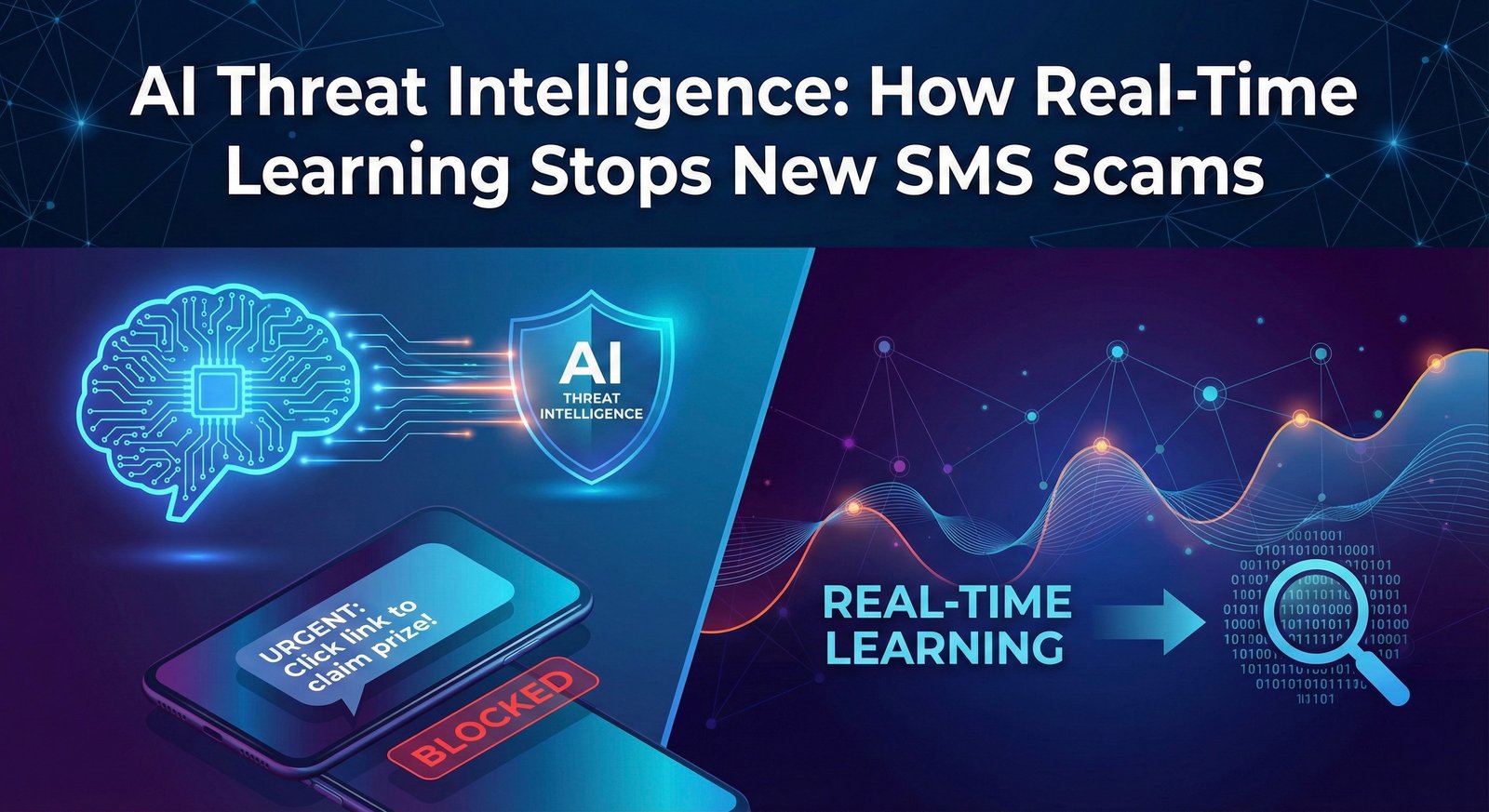
Every day, fraudsters come up with new ways to dupe users via text message-fraudulent OTPs, phishing links, urgent warnings, and more. The traditional security filters can't keep pace, but AI threat intelligence can.
Using real-time machine learning, AI continuously monitors, learns, and reacts to new types of SMS scams the moment they become known. Rather than using static lists or rules, which may be outdated, AI adapts instantly to provide next-generation protection against ever-evolving cyber threats.
Let's explore how AI threat intelligence keeps your phone secure, even from the newest scams.
What Is AI Threat Intelligence?
AI threat intelligence is a technology that puts together artificial intelligence, data analytics, and knowledge of cybersecurity for detecting, predicting, and preventing digital threats.
The meaning of AI in the context of SMS protection would be:
Scans millions of text messages per day
Learns from new scam tactics and domains
Shares such information with all the networks to prevent a similar attack in the future
Thus, AI can spot new threats the very instant they appear, and not days or weeks later.
How Real-Time Learning Works in AI
Real-time learning lets the AI continuously evolve with new sets of data being fed into it.
Here's how it works in detail:
Data Collection: AI receives message data from thousands of sources all over the world.
Threat Classification: It identifies suspicious behavior or unknown URLs.
Pattern Recognition: This technique identifies similarities between new scams with known attacks.
Adaptive Learning: Automatically updates the detection models to identify the new type of threat.
Global Protection: Shares updated intelligence to protect all connected users.
This ensures even brand-new scam campaigns are stopped before they spread widely.
AI Techniques Behind Threat Intelligence
Machine Learning Models: hidden patterns in scam messages could be identified.
Natural Language Processing (NLP): Understands the deceiving content and tone.
Neural Networks: Mimic human intuition for the detection of context-based scams.
Anomaly Detection Systems: Flag sudden spikes of suspicious SMS activities.
These then interact within a smart network of defense that learns faster than any adaptations scammers can make.
Real-Time AI in Action - The TrueSender Advantage
At TrueSender, we have developed an AI-driven system that continuously learns from the global message data and threat reports.
Our AI Threat Intelligence Engine:
Instantly detects and blocks new scam message patterns.
Updates the security models in real-time.
Flags suspicious links and senders before they reach your inbox
Shares information about threats in anonymized form in order to improve protection for all users.
This ensures that your messages remain secure, no matter how fast the tactics of scammers change.
Why Real-Time AI Beats Traditional Security
AI threat intelligence flips SMS security from reactive to proactive, always keeping you protected.
Conclusion
Threat actors are getting smarter, but AI threat intelligence is smarter still. Through real-time learning, AI keeps identifying, analyzing, and neutralizing new scams via SMS well before they reach your device. With the AI-powered threat intelligence provided by TrueSender, your protection system doesn't just react-it evolves and is one step ahead of every scammer