
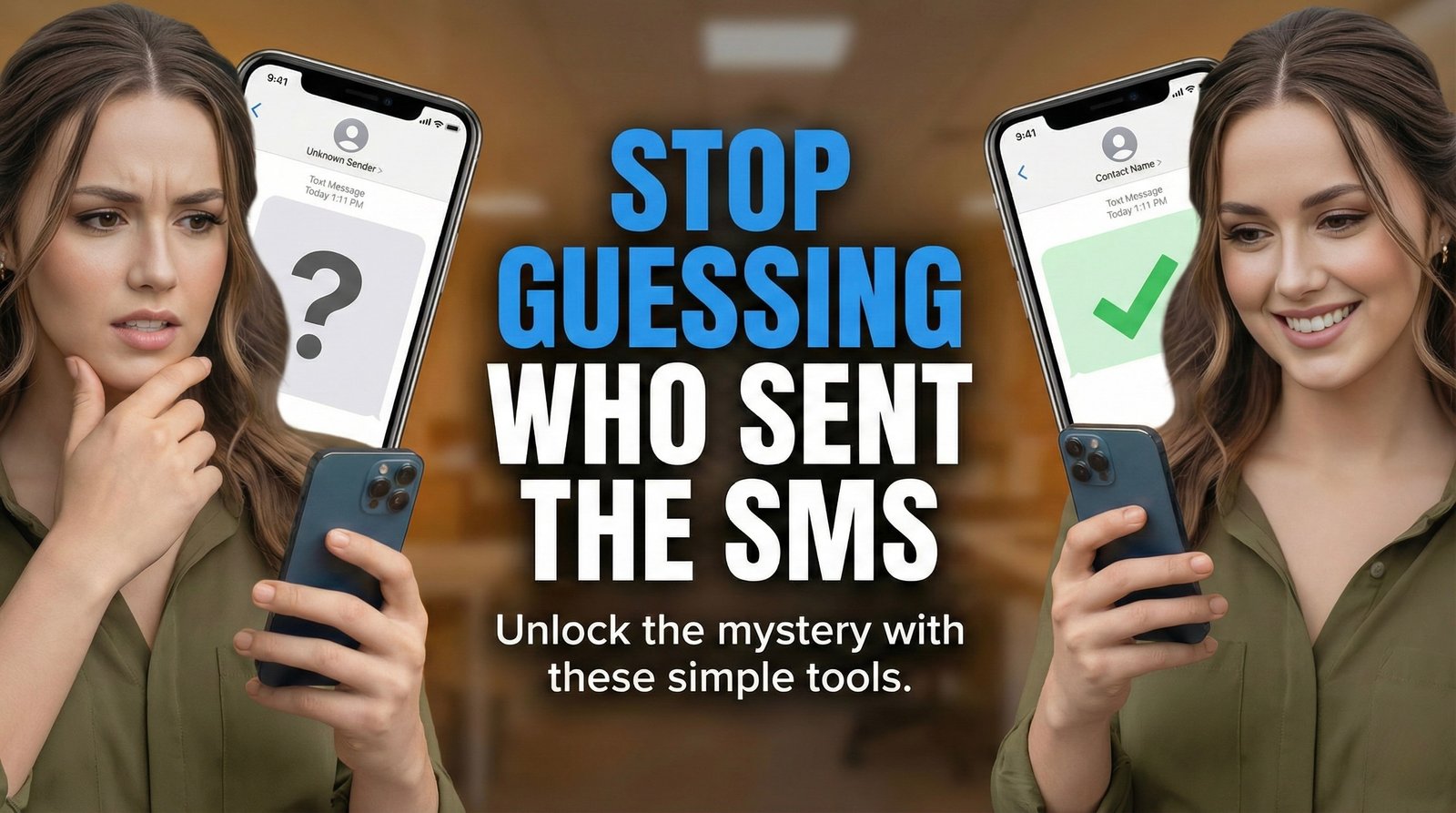
SMS scams have become the fastest growing threat in today's digital age.
People guess when they see a message coming from a bank, courier, government, or a well-known company -
“This must be true”
And that's it, that's where the scam begins.
The truth is that the biggest risk is guessing who the SMS sender is.
What is SMS scam?
SMS scams are fraudulent messages that:
Comes in the name of a bank or government
Ask to click on the link
Asks for OTP, payment or personal information
This message seems so true on the surface that even intelligent people, let alone ordinary people, get trapped.
Why have SMS scams become so dangerous today?
In the past, fake SMS were easily identified:
Wrong English
Unknown number
Clear fraud tone
But today:
Sender ID spoofing occurs.
The name looks like a real bank.
Has the same format as the original SMS
That's what people think:
“This looks very original”
And that's the scammer's advantage.
Why do people trust SMS?
People unconsciously think this way:
Sender name is recognizable - will be correct.
It says "Urgent" - must be done immediately.
Link provided - this will be the same process
All three of these ideas are wrong:
Sender ID can be easily copied
Urgency is meant to create fear.
Link is mostly a fraud
SMS with OTP and link are the most dangerous
If any SMS:
Asks for OTP
Say "Click here"
Threatens to "Account will be blocked"
So understand that:
This is an SMS scam.
Remember:
Bank never asks for OTP in SMS
The government never sends random links.
The mindset behind SMS scams
The scam traps even smart people, because it:
Instills fear.
Makes decisions quickly
Shows authority (bank/government)
People stop thinking and react - and that's where the mistake happens.
Guessing vs Verifying
Estimating:
“It feels right”
“The name belongs to the bank”
“I'll see you later”
The correct way - to check:
Does this SMS make me click on the link?
Can this be done in the official app?
Does this message create fear or urgency?
If the answer is “yes” - then SMS is unsafe.
One golden rule to avoid SMS scams
Never take any action from SMS:
Don't click on the link.
No OTP share
No payment
If the message is correct:
You can check by opening the official app.
You can type the website yourself.
“I will be careful” is not enough
Many people say:
“I can’t, I’ll figure it out”
Fact:
Scams are not always obvious.
Scams are made to look real.
Doubt, not faith, will save you.
Treat SMS as Untrusted by default.
Just like there is spam in Email:
Every SMS = Unverified
Every Link = Risk
Every Urgency = Red flag
Action = ZERO until proof is received.
Conclusion
If any SMS:
Scare you.
To hurry up
Ask to click immediately
So that message is not in your interest.
Stop guessing who sent the SMS.
Consider:
“What does this message want me to do?”
This one question can save you from most SMS scams.